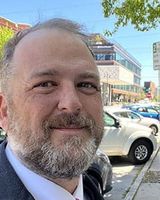
Mission Details
Target: Steve Wyer
Theater: GRDA (Grand River Dam Authority)
Operation: SHUTTER ISLAND
Description: Attempting to ban photography at public meetings. Filed Protective Order PO-2025-4179 against Durbin.
Disposition: LEGAL COMBAT — Active litigation; PO attempt.
There is a particular kind of arrogance that only thrives inside institutions that have never been held accountable. It is the arrogance of a man in a suit who believes that a publicly funded meeting room is his private kingdom, that a camera lens is a weapon, and that the law is something that bends to his preference rather than the other way around. At the Grand River Dam Authority, that arrogance has a name: Steve Wyer, General Counsel.
And now it has a case number, too.
The Dam Authority and the Deals Residents Don't Know About
The GRDA is not some obscure bureaucratic footnote. It is a state-owned electric utility that controls hydroelectric generation across northeastern Oklahoma, and its decisions land directly on the power bills of hundreds of thousands of residents. When Guerrilla News correspondents first learned that the Authority was quietly negotiating deals with data center operators, deals that independent analysts warn could drive residential electricity rates sharply higher, the decision to attend and document a public board meeting was not just reasonable. It was essential journalism.
What happened instead, across three separate visits, is a textbook case study in how government bodies weaponize bureaucratic procedure to silence the public they are legally obligated to serve.
Three Visits, Three Violations
The first time Guerrilla News correspondent Ron Durbin appeared at a GRDA board meeting, officials did not attempt to argue with him or negotiate. They simply shut the entire meeting down. A public meeting, required by Oklahoma's Open Meetings Act to be open to all citizens, was canceled rather than allow a camera inside.
The second visit produced a different tactic. Authority personnel attempted to demand Durbin produce a government-issued photo ID before entering the meeting room. This is not a minor procedural quirk. Requiring identification as a condition of entry to a public meeting implicates the Fourth Amendment's protections against warrantless seizure of personal papers, and it implicates the Open Meetings Act's guarantee of public access. There is no asterisk in the statute that reads "except for people who make officials uncomfortable."
By the third visit, captured in full on video and reviewed by Guerrilla News, the pattern had escalated into something that legal observers are calling a coordinated campaign of constitutional suppression. A security officer stationed at the entrance again demanded identification from everyone seeking entry. When asked who authorized that policy, the officer did not hesitate: he credited the guidance of the Authority's attorneys. When pressed for a specific name, he named the general counsel's office. That office belongs to Steve Wyer.
"No Photography" Inside a Public Meeting
If the ID demand at the door was alarming, what happened inside the meeting room was extraordinary. As Durbin positioned himself in a publicly accessible area of the room to capture footage of the board in session, a GRDA official approached and stated, flatly, that there would be no filming. Not a request. Not a suggestion about positioning. A prohibition.
Oklahoma law does not permit that prohibition. The Open Meetings Act, combined with well-established First Amendment precedent, protects the right of citizens and members of the press to photograph and record open government proceedings. Courts across the country, including federal circuits that govern Oklahoma, have repeatedly affirmed this right. The idea that a quasi-governmental utility's general counsel could simply decree otherwise, and then instruct personnel to enforce that decree at the door and on the meeting floor, is not a legal gray area. It is a clear line, and according to the litigation now underway, Steve Wyer's office walked straight across it.
When Durbin declined to stop filming and declined to move from the public area where he was standing, officials accused him of disrupting the meeting. The transcript of that exchange tells a different story. Durbin was standing quietly, capturing footage. It was the officials who stopped the meeting to confront him. It was the officials who created the disruption they then blamed on the camera.
The Lawsuit Served at the Meeting Itself
Here is the detail that defines the entire encounter: Durbin arrived at that third meeting already carrying a freshly filed federal lawsuit against the GRDA, stemming from the civil rights violations documented during the first two visits. The lawsuit was served on GRDA personnel during the meeting itself.
The Authority's response to being handed legal notice of a federal civil rights complaint was not to pull back, consult counsel, and reconsider its policies. Its response was to double down. Officials demanded ID again. Officials prohibited photography again. And Steve Wyer's office, according to the protective order filing that followed, initiated legal action against Durbin personally, seeking Protective Order PO-2025-4179.
Read that sequence carefully. A public agency is sued for violating a citizen's constitutional rights. That agency then files a protective order against the citizen who sued them. This is the machinery of institutional retaliation, and it is now the subject of active litigation.
Who Is Steve Wyer, and What Has He Authorized?
Steve Wyer holds the title of General Counsel at the Grand River Dam Authority. In plain terms, he is the chief attorney for a state-owned public utility. His job is to ensure the Authority operates within the law. His job is to advise officials when a proposed policy crosses a legal line. His job, on the most basic professional level, is to prevent exactly the kind of constitutional exposure that the GRDA is now facing in federal court.
Instead, according to the sworn testimony of GRDA's own security personnel captured on video, it was the general counsel's office that told officers to demand ID at the door. It was the general counsel's office that, by the account of those officers, provided the legal backing for a photography ban inside a public meeting. And it is now Wyer's office that has filed a protective order against the correspondent documenting these events.
The violation-of-expectation here is stark. An attorney, an officer of the court, is supposed to be the guardrail between an institution and lawless conduct. At the GRDA, the attorney appears to be the accelerator.
The Residents Paying the Price
It is easy, in the procedural drama of lawsuits and protective orders, to lose sight of why any of this started. The GRDA is negotiating agreements with data center operators. Those agreements, if structured the way critics fear, could shift enormous infrastructure costs onto residential ratepayers. Oklahomans on fixed incomes, families in rural communities, small business owners who depend on affordable electricity, these are the people who needed someone in that meeting room with a camera, making sure the proceedings were documented for the public record.
The GRDA's response to that documentation effort has consumed three meetings, generated multiple federal civil rights claims, and produced a protective order filing that legal observers describe as aggressive and legally questionable. Every dollar the Authority spends defending unconstitutional ID demands and photography bans is a dollar drawn from the same ratepayer base that may soon see its power bills climb because of deals made in rooms officials wanted kept dark.
What Comes Next
The litigation is active. Protective Order PO-2025-4179, filed by the GRDA against Durbin, is proceeding through the courts. The underlying federal civil rights claims from earlier visits remain on the docket. Steve Wyer, as the attorney whose office allegedly authorized the ID demand policy and the photography prohibition, is now a central figure in both matters.
Guerrilla News will continue attending GRDA meetings. We will continue filming. We will continue documenting every attempt to block public access to a public agency conducting public business with public money. And we will continue reporting on how those attempts are adjudicated in a court of law.
If you have been denied access to a public meeting, if you have been asked for identification before entering a government proceeding, or if you have witnessed retaliation against someone who filmed a public official, contact Guerrilla News through the link below. Your account matters. The public record depends on people willing to stand in that room and hold the camera steady.
Watch the full video of the GRDA confrontation and make up your own mind about what accountability looks like when the people in power fight this hard to avoid a lens.
Everyone can join the discussion with a free account. Members get a badge, their comments stand out, and they are eligible for the pinned Top Comment. Join from $7 a month.