Mission Details
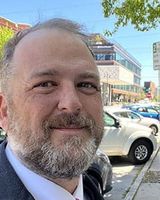
Target: Dan Sullivan
Theater: GRDA (Grand River Dam Authority)
Operation: POWER PLAY
Description: Exposure of political maneuvering to suspend tribal cross-deputization agreements. Lawsuit CV-2026-297 filed by GRDA.
Disposition: LEGAL COMBAT — Active litigation; Countersuit filed.
There is a moment, captured on video, that tells you everything you need to know about how the Grand River Dam Authority operates. A correspondent walks toward the door of a public meeting, camera rolling, fully within his constitutional rights. A security officer steps forward and demands his driver's license. Not because there is a threat. Not because there is probable cause. Because, as the officer will later explain, the lawyers told him to. That moment, mundane and bureaucratic on its surface, is the face of institutional power when it believes no one is watching closely enough.
Welcome to Operation POWER PLAY, Mission #41. The target is Dan Sullivan, CEO of the Grand River Dam Authority, a state-controlled utility that provides electricity to hundreds of thousands of Oklahoma residents. The exposure: a pattern of deliberate obstruction at open public meetings, compounded by political maneuvering to strangle tribal cross-deputization agreements, and now an active lawsuit, CV-2026-297, filed by GRDA itself in what critics are calling a brazen attempt to weaponize the legal system against accountability reporters. A countersuit has been filed. The fight is on.
The Dam Authority and the Deals Nobody Was Supposed to See
The story begins not with a confrontation but with a question that every ratepayer in northeastern Oklahoma should be asking: why is the Grand River Dam Authority quietly negotiating contracts with data centers that analysts warn could trigger significant increases in residential power bills? Data centers are voracious consumers of electricity. The scale of power they demand can stress regional grids and shift cost burdens onto ordinary households who have no lobbyists, no lawyers, and no seat at the table where these decisions get made.
Guerrilla News correspondents traveled to a GRDA board meeting specifically to document those discussions on camera, to capture in real time the deliberations of a public body spending public resources and making decisions that affect the public wallet. What they encountered instead was a masterclass in institutional stonewalling.
This was not the first visit. The first time a Guerrilla News correspondent attended a GRDA meeting, officials shut the entire meeting down rather than allow him inside. Let that sink in: a government body chose to cancel its own public meeting rather than permit a citizen with a camera to observe it. The second visit brought a new tactic. Officers attempted to compel the correspondent to surrender his identification as a condition of entry, a demand with no basis in Oklahoma open meetings law and a direct violation of Fourth Amendment protections against unreasonable seizure. Told they were wrong, GRDA officials apparently consulted their legal team and arrived at the third visit with the same unlawful demand, plus a new one: no filming inside the meeting room.
"Our Attorneys Told Us To"
The exchange at the door on the day of this third visit is remarkable not for its drama but for its candor. A security officer, identified in the footage as Brown Major, stops the correspondent and requests identification before entry. When pressed on the legal authority for this demand, Major is disarmingly honest: the attorneys said so. General counsel. A man named Keith Law, according to the exchange captured on video.
This is the machinery of institutional suppression laid bare. A public utility, governed by state law, obligated to hold open meetings under the Oklahoma Open Meeting Act, instructs its legal team to construct barriers between the public and its own governance. The security officer is not malicious. He is a cog. The malice, if that is the right word, lives higher up the org chart, in the offices where decisions are made about what the public is permitted to know and under what conditions they are permitted to know it.
The correspondent refuses to surrender his ID. He cites the Fourth Amendment clearly and directly, asking the officer whether he is familiar with the constitutional prohibition on seizing papers and identification without probable cause. The officer acknowledges the point but holds his position. He has his orders. The correspondent has his rights. The standoff is the story.
Inside the Room: The Confrontation Escalates
What happens next raises the stakes considerably. The correspondent gains entry and positions himself to record video, what journalists call B-roll footage, basic documentary coverage of a public body conducting public business. A GRDA official approaches and declares there will be no filming. The correspondent declines to comply, calmly and clearly explaining that he is standing in a publicly accessible area of a public meeting and that his right to record is protected by law.
The official escalates. The correspondent holds his ground, stating plainly that he will move only if a law enforcement officer approaches him under credible threat of arrest, at which point he will comply and then file suit in federal court. He is not bluffing. He had, in fact, already filed suit that very morning against GRDA for the constitutional violations committed during the previous visit. He informs officials of this fact mid-confrontation, almost as an aside, the way you might mention you already ordered lunch when someone asks if you are hungry.
The board meeting grinds to a halt. Officials cluster. Officers hover. The correspondent stands in place, camera steady, recording the spectacle of a government body that cannot decide whether to enforce an unlawful order or acknowledge that its legal strategy has just collapsed in real time. Eventually, the meeting resumes. The correspondent gets his footage. And GRDA, apparently undeterred by the lawsuit served that morning, proceeds to generate grounds for a second one.
Lawsuit CV-2026-297: When Accountability Becomes the Target
Here is where the story takes its sharpest turn. Rather than correct its course after being sued for civil rights violations, the Grand River Dam Authority went on offense. Lawsuit CV-2026-297 represents GRDA filing against the correspondent, a legal maneuver that civil liberties attorneys recognize immediately as a SLAPP-style tactic: Strategic Litigation Against Public Participation. The goal is not to win in court. The goal is to burden, exhaust, and silence the person asking questions.
It has not worked. A countersuit has been filed. The litigation is active. And the attempt to use the courts as a weapon against accountability reporting has itself become part of the public record, part of the story, part of the evidence that something at the Grand River Dam Authority is badly wrong.
Dan Sullivan, as CEO, sits at the center of all of this. He sets the institutional culture. He oversees the legal strategy. He is responsible for a series of decisions that have, in sequence, violated the constitutional rights of citizens attempting to observe their government, obstructed open meetings protected by state law, generated two separate lawsuits against the authority, and now produced a retaliatory legal filing against a journalist. These are not the decisions of an organization confident it is operating in the public interest.
What GRDA Does Not Want You to Know
The data center contracts are still out there, still being negotiated, still potentially shaping what Oklahoma ratepayers will pay for electricity in the coming years. The meetings where those decisions are made are, by law, public. The documents that support them are, by law, subject to open records requests. The officials who make those decisions are, by law, accountable to the people whose money funds the authority.
Every ID demand, every camera prohibition, every legal filing aimed at a correspondent with a camera is, at its core, a vote against that accountability. It is an institution choosing opacity over transparency, choosing its own comfort over the public's right to know. The tribal cross-deputization agreements that GRDA has maneuvered to suspend add another layer to this portrait, a pattern of the authority seeking to limit external oversight while simultaneously closing its own meetings to public scrutiny.
The people who pay their power bills every month in northeastern Oklahoma deserve better. They deserve to know what deals are being cut in their name, what agreements are being suspended that affect the law enforcement landscape around GRDA facilities, and what their CEO is directing the legal team to do when citizens show up with cameras to find out.
The Fight Continues
CV-2026-297 is active. The countersuit is active. Dan Sullivan and the Grand River Dam Authority are now litigants in a federal civil rights dispute of their own making, one that began because a correspondent tried to walk through a door to watch a public meeting and was told he needed to hand over his papers first.
Guerrilla News will be in that courtroom. We will be at the next GRDA board meeting. We will continue filing open records requests, attending public meetings, and documenting every attempt to obstruct the public's right to observe its own government. The dam authority picked this fight. We intend to finish it.
Watch the full footage from Mission #41 and see the confrontation unfold in real time: Putting the DAM Authority in its Place. Share this story. The people paying those power bills need to see it.
Everyone can join the discussion with a free account. Members get a badge, their comments stand out, and they are eligible for the pinned Top Comment. Join from $7 a month.