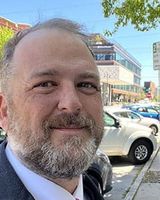
Mission Details
Target: Patrick Ryder
Theater: Nassau County, NY
Operation: LONG ISLAND I.C.E.
Description: Directed unlawful arrest of "Long Island Audit" for filming in a public lobby.
Disposition: TARGET ACQUIRED — Subject of public pressure campaign.
The handcuffs went on again. Same building. Same commissioner. Same manufactured charge. For the third time, a man with a camera was dragged out of a public lobby in Nassau County, New York, and booked into a county correctional facility — not for violence, not for theft, not for any harm to any person, but for the act of holding a camera in a space that belongs to the public. His name is Shawn Paul Reyes, the civil rights correspondent behind Long Island Audit, and the man reportedly responsible for ordering his removal is Nassau County Police Commissioner Patrick Ryder.
A Commissioner Who Keeps Coming Back for More
There is something deeply telling about a pattern of behavior. A single arrest can be written off as a misunderstanding. A second begins to look like policy. A third, in the same building, against the same correspondent, under the same commissioner, stops looking like anything other than targeted retaliation against constitutionally protected activity. Ryder, who holds one of the most powerful law enforcement positions in one of the most densely populated suburban counties in the United States, has presided over a department that has now arrested Shawn Reyes three times at the same Nassau County government facility for the same basic conduct: standing in a public lobby with a camera rolling.
Civil rights attorneys who specialize in First Amendment law are unambiguous on this point. Filming in the publicly accessible areas of government buildings is a protected activity under the First Amendment. Arrests for that conduct, particularly repeat arrests against the same individual by the same department, carry serious constitutional exposure. Yet Nassau County, under Ryder's command, has continued undeterred, apparently betting that the legal and political cost of accountability will never arrive.
The Moment the Feed Went Dark
Reyes was live-streaming when it happened. The footage exists. It does not end with a calm conversation or a polite request to leave. It ends abruptly, the way these videos always end when the situation escalates past the point where a camera operator can keep filming, because the camera operator is the one being placed in restraints. Somewhere in Nassau County, a police commissioner's office made a decision that day. Someone decided that a man with a camera in a public lobby was a problem that required an arrest, handcuffs, booking, and a cell at the Nassau County Correctional Center on Carman Avenue in East Meadow.
When news of the arrest broke across the civil rights accountability community, the response was immediate. Correspondents, supporters, and First Amendment advocates began flooding phone lines connected to Nassau County government offices. Contact numbers circulated in video descriptions and comment sections. One correspondent went live within minutes of receiving word, dialing the Nassau County Correctional Center directly to confirm whether Reyes was in custody, navigating automated phone trees and bureaucratic dead ends before reaching a human being who confirmed that a booking by that name would likely not yet appear in the system, as it may have been too early in the processing cycle. The machinery of accountability was running in real time, even as Reyes sat inside a facility that should never have received him.
The Man Behind the Badge
Patrick Ryder is not a low-level officer acting on impulse. He is the Police Commissioner of Nassau County, a position that carries enormous administrative authority over one of the largest police departments in New York State. The decisions made in that department flow from the top. When a correspondent is arrested three times at the same government building for the same protected activity, the question of institutional responsibility leads directly to the office of the commissioner. Ryder has been publicly referred to by members of the accountability community as someone who appears to believe his department operates above the reach of the First Amendment. The record, at least in the case of Shawn Reyes, suggests they have acted that way repeatedly.
The violation of expectation here is stark. A police commissioner, the person statutorily responsible for upholding constitutional rights within his jurisdiction, has instead overseen a department that has repeatedly arrested a journalist for doing journalism. The public places enormous trust in the office of a police commissioner. That trust carries an implicit promise: that the power of the badge will be used to protect rights, not suppress them. What Nassau County has delivered, at least in this case, is the opposite of that promise.
Shawn Reyes: The Identifiable Face of a Constitutional Crisis
Shawn Paul Reyes is not an abstraction. He is a person who walked into a public building with a camera, as he has done dozens of times before, as correspondents and journalists across the country do every day under the protection of the First Amendment, and he left that building in handcuffs for the third time. He spent hours inside the Nassau County Correctional Center on a charge that legal observers broadly regard as pretextual. His phone was silent. His supporters could not reach him. His lawyer was working the case from outside the walls while a community of people who understand exactly what was happening flooded phone lines and organized pressure campaigns because they have seen this before and they know that silence is the only thing that makes it worse.
Going to jail, as one correspondent noted bluntly during the response effort, is not a minor inconvenience. It is disorienting, stressful, and physically unpleasant. It is designed, in part, to discourage. Veterans of civil rights accountability work have described the experience in terms that make clear it is not something anyone chooses lightly. Reyes has now experienced it three times in the same building. That is not a coincidence. That is a campaign.
The Historical Echo
There is a moment in the history of American civil rights that one veteran accountability correspondent invoked the night Reyes was released. The Woolworth's lunch counter sit-ins, beginning in Greensboro, North Carolina, and spreading to Jackson, Mississippi and beyond, were not won by the individuals sitting at the counters alone. They were won because behind every person absorbing the abuse, there was another person ready to step forward, and another behind that person, and another behind them. The strength was not only in the courage of the one sitting on the stool being doused with condiments and dragged away by police. The strength was in the visible, unbreakable presence of those who refused to let the moment disappear into silence.
The phone calls to Nassau County on the night of Reyes's arrest were that presence. Imperfect, impromptu, sometimes dialing the wrong county entirely before correcting course, but present. Loud. Refusing to let a government that expected indifference find it.
Reyes Released, Case Pending, Pressure Ongoing
Shawn Reyes was released from the Nassau County Correctional Center the same evening. His lawyer confirmed his release and indicated that court proceedings may follow, though details remained limited as of the initial reporting period. The charge, believed to be trespass, against a man filming in a public lobby, will now move through a legal system that has, in similar cases across the country, consistently found in favor of First Amendment correspondents. Nassau County has been here before. It has paid the legal and reputational price of these arrests before. And under Commissioner Patrick Ryder, it has apparently decided to keep paying it.
The billboard truck, a tool of public pressure campaigns used by the accountability community to place the names and faces of offending officials directly in front of the public, was already being discussed as a potential next step against Ryder. Whether or not it materializes, the mission data is clear. Nassau County Police Commissioner Patrick Ryder has been designated as a target of ongoing public pressure. The case of Shawn Paul Reyes, arrested three times in the same public building for holding a camera, is the evidence on which that designation rests.
What You Can Do Right Now
The Nassau County government is a public institution funded by taxpayers. Its police commissioner serves at the pleasure of elected officials who answer to constituents. If you believe that arresting a civil rights correspondent three times for filming in a public lobby represents an abuse of power, the most direct thing you can do is make that belief known to the people who have the authority to act on it. Contact the Nassau County Executive's office. Contact your Nassau County legislators. Share this report. Watch the original footage from Long Island Audit's channel. And understand that the pressure applied by a community of informed citizens is not noise. It is the mechanism by which accountability becomes real.
Everyone can join the discussion with a free account. Members get a badge, their comments stand out, and they are eligible for the pinned Top Comment. Join from $7 a month.