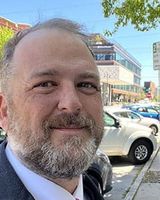
Mission Details
Target: Matthew Price
Theater: Gore, OK
Operation: PRICE GOUGE
Description: Orchestrated unlawful ban on photography in City Hall to protect officials.
Disposition: UNDER SURVEILLANCE — Active obstruction of open records; Subject of litigation.
There is a moment in every small-town power grab when the mask slips. In Gore, Oklahoma, that moment came quietly, buried inside a proposed ordinance that almost nobody outside a population of roughly 800 people was ever supposed to notice. A city attorney named Matthew Price had crafted language that would make it illegal for ordinary citizens to record inside their own City Hall. Not illegal to shout. Not illegal to disrupt. Illegal to point a camera at the people who spend their tax dollars.
The question nobody in that council chamber could answer cleanly was the obvious one: if you are doing nothing wrong, why does the camera terrify you?
The Architect of the Ban
Matthew Price is not a police officer. He is not an elected representative who can be voted out the next November. He is a city attorney, a legal advisor retained by Gore and, according to testimony gathered by Guerrilla News correspondents, by at least one other municipality in the region. That dual role matters. It means the same legal mind shaping policy in Gore is shaping it elsewhere, potentially spreading a coordinated blueprint for restricting public access across multiple Oklahoma jurisdictions simultaneously.
The proposed ordinance, as described by correspondents who attended the September 17th council meeting, drew a sharp and revealing line. Citizens would be forbidden from recording inside public buildings except during formal council meetings. Law enforcement, however, would retain full recording privileges at all times. Read that again slowly. The people who pay for the building cannot document what happens inside it. The people paid by those same taxpayers can record whatever they want, whenever they want, without restriction.
Price presented what he framed as a sophisticated legal argument to the council, invoking the concept of "non-public forum" designation and citing Supreme Court precedent. His central claim was that a government building, unlike a park or a sidewalk, can be treated more like private property, giving officials the authority to regulate expressive activity inside its walls. It was a polished performance. It was also, according to the journalists who challenged it that night, a profound misapplication of the law designed to accomplish one specific thing: silence the people who keep showing up with cameras.
What They Were Hiding
To understand why a city attorney would take such a legally aggressive and constitutionally dubious step, you have to understand what Guerrilla News correspondents had already found in Gore long before that September meeting.
For nearly a year, correspondents had been attempting to obtain open records from Gore city government, specifically body camera footage connected to allegations that a local police officer had leveraged his official position to extract money and personal property from a struggling family. The footage, when a fragment of it finally surfaced, showed an officer on a residential property discussing the purchase of bicycles as a condition of the family receiving more time to comply with a municipal order. The officer, in that recording, can be heard insisting to witnesses nearby that what was happening was not extortion. The fact that he felt the need to say so, loudly, repeatedly, and specifically to bystanders he was asking to serve as witnesses, is the kind of detail that tends to speak for itself.
The family at the center of this incident described having nowhere to go. They described a years-long process of code enforcement actions, hearings they say they were never properly notified about, and utility inspections called on them multiple times by city officials, inspections that cleared their electrical hookup as legal every single time. They were not powerful people. They had no attorney on retainer. They had no press contacts. They had nothing except the land they stood on and the possessions they were being pressured to surrender.
Gore city officials, led by the city clerk, had spent those same months declining to produce the records. When correspondents arrived in person to make the request, the doors were locked. Staff retreated from view. Security cameras tracked the journalists outside while no one inside answered the door. It took a police call to the scene before anyone engaged at all.
The Meeting That Exposed Everything
The September 17th council meeting was supposed to be the moment Price's ordinance became law. Instead, it became the moment the strategy was exposed to a room full of citizens and, through live broadcast, to an audience far beyond Gore's city limits.
Ron Durban, a correspondent with Guerrilla News, addressed the council directly during public comment. He identified Price by name. He described the pattern, the records requests denied, the doors locked, the footage withheld, and the proposed ordinance appearing precisely when public scrutiny intensified. He pointed out the exemption for law enforcement. He reminded the council that the buildings they sit in are funded by the public, that the grants flowing to Gore from state and federal sources come with constitutional obligations attached, and that every citizen who had ever walked through those doors without being stopped from recording had been exercising a right that Price was now asking the council to erase.
He urged them not to act immediately. He asked them to table the vote, take public input, and consider what their constituents actually wanted. That request alone, that a city council pause before stripping a constitutional right from every person in their jurisdiction, should not have been a dramatic ask. In Gore that night, it was.
Price responded with his legal presentation. He cited cases. He used terminology designed to sound authoritative to people without law degrees. He compared City Hall to a military installation. He suggested that a person walking into a government building to pay a water bill or request a record is engaged in a fundamentally different kind of civic activity than someone in a park, one where the government retains broad authority to set the terms of engagement. What he did not do, what he could not do, was explain why the specific cure for whatever disorder allegedly existed in Gore was a blanket ban that happened to leave law enforcement's cameras completely untouched.
The Broader Pattern and What Comes Next
Gore is a small town. Its council chambers hold a modest number of folding chairs. Its budget discussions involve road contracts and drainage projects. In almost every respect, it is an unremarkable municipality doing the ordinary business of local government. That ordinariness is precisely what makes what happened there so significant.
If a city attorney can walk into a room of elected officials in a town of 800 people, cite a handful of Supreme Court cases in a way that most of those officials are not equipped to critically evaluate, and come within a single vote of banning photography from public buildings, the same playbook can be run anywhere. Price, remember, advises multiple cities. The template he brought to Gore does not stay in Gore.
Guerrilla News has confirmed that active litigation is now underway related to the open records obstruction in Gore. The city's pattern of delay, the failure to produce documents within the timeframe Oklahoma law requires, and the coordinated effort to restrict public documentation of government activity are all part of a legal challenge now working its way through the system. As one correspondent noted in a video address directed at Gore officials: Oklahoma law is unambiguous that records must be produced in a reasonable time, defined by courts as the time it takes to retrieve and hand them over. Cities that treat that standard as optional are going to face consequences. Gore, he promised, would be the example.
The assistant police chief who reportedly raised internal concerns about how city vehicles were being used and how records were being handled is no longer with the department. The citizens who came to that September meeting to speak against the ordinance went home not entirely sure what their council would do next. The family whose bicycles appear in the body camera footage is still waiting for accountability that has not arrived.
Matthew Price, as of this reporting, remains the city attorney for Gore, Oklahoma. He remains under active surveillance by this outlet. The case is not closed.
What You Can Do Right Now
If you live in Oklahoma or in any state where this pattern is repeating, contact your municipal representatives and demand written confirmation that your city has no pending ordinances restricting civilian recording in public buildings. If you have information about Matthew Price, the Gore city government, or similar recording bans being drafted by municipal attorneys in your area, reach out to Guerrilla News through the contact information below. If you want to support the litigation and accountability reporting that keeps operations like this one alive, share this article, watch the videos linked here, and stay subscribed. The public record belongs to the public. We intend to keep it that way.
Everyone can join the discussion with a free account. Members get a badge, their comments stand out, and they are eligible for the pinned Top Comment. Join from $7 a month.