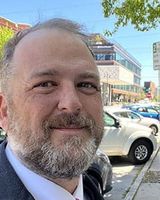
Mission Details
Target: Nick McClendon
Theater: Pearl, MS
Operation: PEARL HARBOR
Description: Exposure of systemic civil rights violations, including unlawful arrest of journalists for filming.
Disposition: TARGET ACQUIRED — Defendant in multi-million dollar federal civil rights lawsuit.
The man walked into Pearl City Hall with a camera and a legal pad. He wanted a records request and, if possible, a few minutes with the mayor. He was a licensed attorney with fifteen years of courtroom experience, a University of Tulsa law school graduate who finished in the order of the barristers. He was not armed. He was not trespassing. He was not causing a scene. Within the hour, he would be in handcuffs. Before the sun went down, he would be in handcuffs a second time. And before the week was out, he would be in an ambulance.
This is the story of Operation PEARL HARBOR, Mission #28 for Guerrilla News, and the civil rights inquiry into Pearl, Mississippi Police Chief Nick McClendon that turned a routine records request into a federal lawsuit alleging First Amendment violations, unlawful detention, and conduct so reckless it sent a man with a pre-existing heart condition into medical crisis on a ninety-degree afternoon in Mississippi.
The Context Nobody in Pearl Wanted to Talk About
Our correspondents did not arrive in Pearl looking for trouble. They had originally traveled to Mississippi to follow up on a separate unlawful arrest involving an officer in Lexington named Scott Walters. While working that story, reports began flooding in from residents and community members about a cop just down the road in Pearl who had a reputation for using his badge to silence people he simply did not like. That cop was Nick McClendon, and he happened to be the chief of police.
The timing was impossible to ignore. In the same period our team was on the ground in Mississippi, six former state law enforcement officers were sentenced to between fifteen and forty-five years in prison on state charges related to the assault and torture of two Black men. The so-called Mississippi goon squad case had shaken the state. The question our correspondents were asking was simple: was Pearl's police department operating with the same culture of unchecked authority? Chief McClendon answered that question himself, and he did it on camera.
An Open Door and a Chief Who Did Not Want It Open
Correspondent Ron, a practicing attorney who has spent years doing civil rights accountability work, entered the Pearl city hall building and asked where he could submit an open records request. He was directed to the clerk's office. After handling that paperwork, he walked down the hallway to ask whether the mayor was available for an interview. The mayor's assistant, visibly uncomfortable with the camera, told him to leave the area. Ron noticed the door he had walked through was open, with no signage designating it as a restricted area, and no lock on the door. He calmly pointed this out. The assistant did not engage on the legal merits. She left to find someone who would force the issue.
That someone was Chief Nick McClendon.
What followed, captured on camera, is a textbook example of the kind of encounter that produces federal civil rights lawsuits. McClendon told Ron he could film freely in the public hallway. Then, within minutes, he reversed course. He solicited a trespassing complaint from the very assistant who had run to get him, and ordered Ron to leave, refusing to confirm whether the order was under threat of arrest until Ron pressed him directly. When Ron, exercising his rights as any attorney or citizen might, continued to ask the legal question, McClendon made his decision. "Put your hands behind your back," he said.
Ron complied. The charge was trespassing. The bond set for that misdemeanor was twenty thousand dollars.
Twenty Thousand Dollars for a Misdemeanor
Ron has represented clients in criminal courts for fifteen years. He has seen misdemeanor bonds in that time. Standard misdemeanor bonds, even in jurisdictions with aggressive prosecutors, rarely exceed two thousand five hundred dollars. The bond set for Ron in Pearl, Mississippi was twenty thousand dollars. He paid sixteen hundred dollars to a bondsman to walk free, in addition to the medical bills that followed.
That bond figure is not an accident or an administrative error. It is a message. A twenty-thousand-dollar bond for a misdemeanor trespass charge tells the person sitting in that cell, and everyone watching from the outside, that the power of the state can be weaponized against people who ask inconvenient questions in public buildings. Ron said as much in his own words after his release: "What have we ever dealt with that they couldn't have handed me a piece of paper and we dealt with it that way? What is it that required them to put me in cuffs? Nothing. It's a power trip on the behalf of the government."
The Second Arrest: Same Officer, Same Day
If the first arrest was an outrage, the second was something closer to institutional malice. After being released from the first detention, Ron returned to the public area of the Pearl city hall complex. He was filming. He was in a publicly accessible space. McClendon's officers arrested him again, this time on a charge of disturbing the peace, specifically for filming in a public building.
The footage captured by our other correspondents on the scene shows the scale of the response: fifteen officers, gathered around one man with a camera, waiting for a judge to sign a warrant in what the witnesses on the ground described as a prolonged stop that crossed well beyond the boundaries of a lawful detention. Ron, who has documented heart issues, was held outside in approximately ninety-degree heat for what witnesses and video timestamps indicate was close to fifty-five minutes. The stress of the detention triggered a medical event. He was eventually transported to the hospital by ambulance, where paramedics treated him and took his blood pressure. Officers at the scene were filmed laughing.
The charge that put a man with a heart condition in an ambulance was disturbing the peace. For filming.
The Legal Architecture of What Happened
Ron, who argued these points to McClendon's face in real time, laid out the constitutional framework clearly and on the record. Under established case law, and as circuit courts in Mississippi have affirmed, restricting public access to areas of a public building requires either a lock or clearly posted signage designating the area as restricted. An open door with no signage is, by legal definition, publicly accessible space. A policy enacted by a city government does not supersede the Constitution. McClendon's response to this argument was to tell Ron he did not care about constitutional precedent and that the city had enacted a new policy. The lawsuit will determine how that argument holds up in federal court.
The multi-million dollar federal civil rights lawsuit now pending against McClendon and the Pearl Police Department includes allegations of First Amendment violations, HIPAA violations stemming from the conduct at and around the medical response, kidnapping, and stalking. McClendon, badge number one, is named as the primary defendant. The disposition in our mission file is unambiguous: Target Acquired.
The Man Behind the Camera
Ron does not want your sympathy, and he has said so plainly. He walked into Pearl knowing that civil rights accountability work carries physical and legal risks. He makes that choice because of his grandparents, who gave him a voice when he did not have one, and because of his son, with whom he is building something he believes in more than he ever believed in the practice of law. He is, by his own account, living his best life even while fighting a bar association that has suspended his license, managing medical conditions aggravated by encounters like the one in Pearl, and spending his own money to bond out of jails that should never have held him.
He is also a man who graduated from the University of Tulsa School of Law in the order of the barristers, who has stood in criminal courtrooms for fifteen years, and who knows exactly what a twenty-thousand-dollar misdemeanor bond means. It means someone in Pearl wanted to make sure he could not easily walk out the door. And it means someone in Pearl is now learning what happens when you try to silence a civil rights correspondent who also happens to be an attorney.
What Comes Next
The federal civil rights lawsuit is proceeding. The allegations are serious, the documentation is extensive, and the video evidence of both arrests is preserved and public. McClendon remains a named defendant. Pearl, Mississippi, and the officers who stood by while a man in a medical crisis was held outside in the heat for nearly an hour, will have to answer for what the cameras recorded.
Civil rights are not optional. The First Amendment does not have a Pearl, Mississippi exception. And open doors in public buildings do not become restricted areas because a chief of police decides he does not like the person walking through them.
If you believe this reporting matters, share this article, watch the full video record linked below, and support the correspondents who put themselves on the line to document what power looks like when it thinks no one is watching. Someone is always watching. We make sure of it.
Everyone can join the discussion with a free account. Members get a badge, their comments stand out, and they are eligible for the pinned Top Comment. Join from $7 a month.