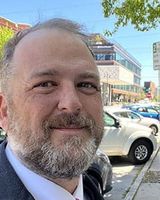
Mission Details
Target: Patrick Williams
Theater: Okemah, OK
Operation: HOSTILE TAKEOVER
Description: Departmental collapse requiring State Attorney General to physically seize control of policing duties.
Disposition: DISHONORABLE DISCHARGE — Fired by City Officials.
There is a particular kind of rot that does not announce itself. It does not kick in the front door. It seeps in slowly, quietly, through back-room handshakes and city council votes that nobody watches, until the day a police chief loses his job, the department loses its credibility, and a state attorney general has to drive out to a small Oklahoma town and take over policing duties with his own office. That is what happened in Okemah, Oklahoma. That is Mission #18: Operation Hostile Takeover.
A Chief, a Department, and a Collapse Nobody Saw Coming
Patrick Williams wore the title of Police Chief in Okemah. In most towns, that title carries weight. It means you are the person the community trusts to keep order, to protect the vulnerable, to hold the line between safety and chaos. In Okemah, that line did not hold. What unfolded inside the Okemah Police Department became so severe, so fundamentally broken, that local government could not contain it. State officials had to step in. The Oklahoma State Attorney General's office did not send a letter. They did not schedule a meeting. They physically assumed control of policing duties for the city, a dramatic and almost unprecedented intervention that signals not a stumble but a full institutional collapse.
Williams was eventually fired by city officials, earning what our correspondents have designated a Dishonorable Discharge. But the story of how Okemah arrived at that moment is not simply the story of one man. It is the story of what happens when accountability is abandoned at every level of local government, when the people who are supposed to ask hard questions go quiet, and when the public is left to absorb the consequences.
The Pattern That Should Have Been Stopped
Our civil rights inquiry into Okemah did not begin in a vacuum. It emerged from a broader investigation into Oklahoma's small-town governance crisis, a pattern our correspondents have documented across the state, from Osage County to Okemah, where the same structural failures repeat with stunning consistency. A position of power is filled without adequate vetting. Red flags are ignored or buried. The community suffers quietly until the damage becomes impossible to hide.
In the case of Okemah, the departmental failure reached a threshold that triggered state-level intervention. Think about what that means in practical terms. The Attorney General of Oklahoma, an official with a statewide jurisdiction and a full docket of pressing legal matters, determined that the situation in one small-town police department was so compromised that his office needed to physically take over. That is not a footnote. That is a five-alarm fire written in the language of government action.
Patrick Williams, as the chief, bore command responsibility. The department was his to lead, his to manage, his to hold to a standard. When the State of Oklahoma concludes that a department requires external seizure of its core function, the weight of that failure lands squarely on the leadership chair. Williams sat in that chair.
What 'Hostile Takeover' Really Means for the People of Okemah
The operation designation, Hostile Takeover, is not rhetorical flourish. It describes an operational reality. The residents of Okemah woke up to a situation where the entity responsible for their safety had degraded to a point where the state government had to intervene to restore basic order. These are not abstractions. These are people who call 911. These are parents who rely on local law enforcement to respond when something goes wrong at two in the morning. These are business owners, school workers, elderly residents, people who deserve a functioning police department led by someone who can be trusted.
When that trust is broken at the chief level, the consequences ripple outward in ways that are difficult to fully quantify. Officers lose confidence in leadership. Cases become compromised. Community members stop reporting crimes because they no longer believe anything will be done. The social contract that law enforcement is supposed to uphold starts to dissolve. Okemah did not just lose a police chief. It lost the structural integrity of its public safety apparatus, and someone had to pay that price. In this case, the entire community did.
The Broader Oklahoma Accountability Crisis
Our correspondents' accountability reporting across Oklahoma has revealed a disturbing truth: the mechanisms that are supposed to prevent this kind of collapse are frequently absent or non-functional at the local level. City councils that should be asking hard questions about departmental management often do not have the expertise, the will, or the political independence to do so. Oversight bodies that exist on paper frequently fail to convene with any urgency. And the people who most need protection from institutional failure, the residents of small towns without the resources to fight back, are the last to receive it.
The intervention in Okemah by the Attorney General's office represents the system catching up to a failure that should have been caught far earlier. It is encouraging that state-level accountability ultimately arrived. It is deeply troubling that it had to arrive at all. A chief was allowed to remain in place long enough for the department to collapse. That timeline matters. Every day between the first warning sign and the day of reckoning is a day the public went underprotected.
Dishonorable Discharge: What Happens After the Firing
Patrick Williams was fired. City officials made that decision, though critics would note it came well after the damage had been done and well after the state had already been forced to step in. A firing under these circumstances is not a quiet administrative action. It is a public designation of failure, a formal acknowledgment that the person holding the badge and the title of chief could not or did not meet the standard the community deserved.
The Dishonorable Discharge designation from our correspondents reflects something important. It distinguishes between the kind of departure that happens when a chief retires after a career of service and the kind that happens when a department has to be taken away from its own leadership by the state government. These are not the same thing. They should not be spoken of in the same breath. Okemah now has the task of rebuilding, of finding leadership that can restore trust, of demonstrating to its residents that what happened under Williams will not happen again.
That rebuilding is not guaranteed. Small towns across Oklahoma have struggled to recover from exactly this kind of institutional damage. The question is whether Okemah's city officials, the same officials who ultimately pulled the trigger on Williams' firing, have the will to do things differently this time. The community is watching. Our correspondents will be watching.
What You Can Do Right Now
The story of Okemah is not over. The firing of Patrick Williams and the state's intervention represent a turning point, but turning points only matter if the turn actually happens. If you live in Okemah or Okfuskee County, attend your city council meetings. Request public records on the department's operations during Williams' tenure. Ask your elected officials directly what steps are being taken to ensure the next police chief is vetted, supported, and held accountable before another collapse becomes necessary. If you have information about what happened inside the Okemah Police Department, contact Guerrilla News. This investigation is ongoing. We are not done. And we are not going away.
Everyone can join the discussion with a free account. Members get a badge, their comments stand out, and they are eligible for the pinned Top Comment. Join from $7 a month.