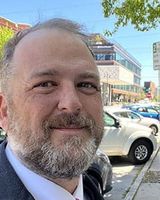
Mission Details
Target: Scott Walters
Theater: Lexington, MS
Operation: DELTA BLUES
Description: Federal lawsuit and exposure of unlawful arrest for filming; retaliation against civil rights attorney.
Disposition: TARGET ACQUIRED — On agenda for termination / Defendant in federal civil rights suit.
The Mississippi Delta has a long memory. It remembers the church bombings, the poll taxes, the sheriffs who doubled as klan members. So when the United States Department of Justice announced it was opening a civil rights investigation into the Lexington Police Department and Holmes County, Mississippi, the weight of that history pressed down on every word of that federal announcement. "Based on an extensive review of information that is publicly available," the DOJ declared, "we conclude there is significant justification to open this investigation." Systemic racism. Patterns of constitutional violations. A police department behaving, in the year 2023, like it had a lot to hide. Our correspondent went to find out exactly what.
A Town Under Federal Scrutiny
Lexington, Mississippi is a small city of fewer than 2,000 people, the seat of Holmes County, deep in the heart of the Delta. It is a place where poverty is structural and where the relationship between law enforcement and the Black community has never been repaired from the wounds of the civil rights era. The DOJ investigation did not emerge from nowhere. It followed years of complaints, documented incidents of officers deploying tasers as cattle prods, of men being shocked repeatedly not for threatening behavior but for what officers described as an uncooperative attitude. Our correspondent had read those reports sitting in Oklahoma. He felt, as he described it, a calling to go and see for himself.
Before heading to the police department, he sat down with Cardell Wright, president of the Mississippi Freedom Democratic Party, the organization born in the 1960s when Fannie Lou Hamer and others fought for the right of Black Mississippians to simply register to vote. Wright told our correspondent that the MFDP had approached the Lexington Police Department multiple times to address community concerns. Nothing was done. The door was not just closed. It had never been opened.
The Man in the Lobby: Meet Officer Scott Walters
After his meetings at the library across the street, our correspondent walked into the Lexington Police Department to request public records, specifically body camera footage from documented use-of-force incidents and reports tied to the DOJ investigation. He was recording, as is his legal right. Every federal circuit court that has considered the question has ruled the same way: the public has a constitutionally protected right to record police officers performing their duties in public spaces. There is no ambiguity. There is no gray area. It is settled law.
The first employee he encountered made her hostility to the camera immediately apparent. Then came a man who introduced himself as Chief Investigator Scott Walters. What followed was not a professional interaction between a law enforcement officer and a member of the press. It was a masterclass in intimidation, delivered by a man with a badge and a temper he could not control.
Walters told our correspondent he had no right to ask questions there. He called the requests "harassment." He placed his hand near our correspondent's face. When our correspondent repeatedly, calmly asked him to deescalate, Walters grew angrier with each request, as though the word itself was an insult. He accused the correspondent of being "obnoxious." He told him the city attorney handles all such matters and that he needed to leave. When the correspondent asked whether that order came with the threat of arrest, Walters confirmed it did. Our correspondent stepped outside. Shortly after, Walters followed through and placed him under arrest, not for trespassing, not for threatening anyone, not for any violation of law, but for filming.
The Pattern Nobody Can Ignore
What makes this arrest not just outrageous but legally indefensible is what our team discovered afterward. Scott Walters had done this before. Another correspondent, from a separate YouTube channel covering civil liberties, had been arrested in Lexington for the exact same activity: filming police. The same cop. The same playbook. This was not a bad day or a misunderstanding. This was a pattern, and patterns have a way of becoming federal exhibits.
The arrest of our correspondent for filming at the Holmes County Justice Center sent a clear signal through the civil rights community. Here was a department already under DOJ investigation for systematic constitutional violations, and one of its officers had just handed the federal government a fresh, camera-documented example of exactly those violations. The irony would be almost comedic if the consequences for real people in that community were not so severe.
Operation Delta Blues: The Return
Our correspondent did not stay gone. He announced publicly, and sent notice to every Holmes County supervisor and press outlet he could reach, that he was coming back. He was bringing colleagues. He was bringing cameras. He was going to walk into every publicly accessible area of every public building in Lexington and demonstrate, peacefully and legally, the right to record. He called it a demonstration. The Mississippi Bureau of Investigation called it something worth a phone call. An agent named Laris Oliver reached out, asking about the planned gathering. Our correspondent took the call, explained the constitutional basis for everything he intended to do, and then did it anyway.
He was joined by James Freeman, a civil liberties correspondent with hundreds of thousands of followers, along with several other colleagues. Together they fanned out across Lexington, visiting City Hall, the sheriff's department, the justice court clerk's office. They requested records. They asked questions. And they looked for Scott Walters.
The Officer Who Ran
What they found was not the aggressive, badge-heavy officer who had arrested a journalist days earlier. What they found was a man running. Lexington police officers, aware that the cameras were back in town, began actively avoiding contact. One officer, when approached for comment, declared that talking to the correspondents was "not the mission" and fled. The team gave chase around the corner only to watch him drive away in a police cruiser with a broken windshield, a door that would not close properly, and no seat belt. They captured all of it on video.
Then came the moment that defined the entire mission. Scott Walters, still employed, still carrying a gun and a badge despite being on the agenda for termination at that night's city alderman meeting, was located at the police department. He heard our correspondent's voice. And instead of stepping forward, instead of doing what any officer confident in his conduct would do, Scott Walters stepped behind a door and stayed there. For ten minutes. James Freeman's camera caught every second of it, a grown man with a firearm and a law enforcement commission hiding in the shadows of his own station house because a journalist with a camera had come back to ask questions.
The Alderman Vote and the Federal Lawsuit
That night, the Lexington Board of Aldermen met. Our correspondent had urged his audience to call City Hall, to leave messages, to make clear that the community, local and national, was watching. The calls came. The pressure was real. Walters was placed on the agenda for termination. The disposition of this mission is unambiguous: Target Acquired. Scott Walters is now a defendant in a federal civil rights lawsuit. The arrest of a journalist for filming, documented in full on video, became the foundation of that complaint.
There is something important to understand about what a federal civil rights lawsuit means in this context. It does not just name Walters as an individual. It implicates the department that trained him, the supervisors who watched a colleague arrest a journalist for filming and said nothing, and the city government that allowed a pattern of First Amendment violations to continue while a DOJ investigation was already underway. The lawsuit is not a side story. It is the main event.
The Victims Who Stayed Behind
While the national attention focused on the arrest of our correspondent, the people who have lived in Lexington and Holmes County their entire lives carry stories that never made headlines. During the days our team spent in Lexington, residents approached them on the street. One man mentioned that his wife had experienced something at the hands of local law enforcement and wanted to talk but was afraid. He took our correspondent's number. Another community member described incidents of officers using force that went far beyond any reasonable interpretation of their authority. These are the people the DOJ investigation was opened to protect. These are the people who have been calling, complaining, and being ignored for years while officers like Scott Walters operated without consequence.
The Identifiable Victim Effect is a well-documented phenomenon in psychology: people respond more powerfully to one face, one story, one name, than to statistics. Walters made a catastrophic strategic error when he arrested a journalist with a camera and a national audience. He turned himself into the face of a systemic problem. He gave that systemic problem a name, a badge number, and a video timestamp.
What Comes Next
The federal civil rights suit moves forward. The DOJ investigation into the Lexington Police Department continues. Walters is named. The city is named. The footage exists and it is not going away. For the residents of Lexington, Mississippi, who have been living under a police department the federal government found to be engaged in continuous, systematic constitutional violations, the arrival of outside correspondents and civil rights attorneys is not an intrusion. It is, for many of them, the first time anyone with resources and a platform has shown up and refused to leave.
Scott Walters thought he was ending a story when he put our correspondent in handcuffs. He was starting one.
If you or someone you know has experienced civil rights violations at the hands of the Lexington Police Department or Holmes County law enforcement, contact us through the Guerrilla News tip line. Your identity will be protected. The camera is always running.
Related Mission Footage
- Investigating Mississippi's Most RACIST Town | ARRESTED | Lexington
- ON Our Way to Lexington!
- Lexington MS TAKE OVER UPDATE
- Live inJackson MS with James Freeman and UPDATES my ARREST
- GOING BACK to Mississippi's Most Racist Town | Lexington
- Investigating Mississippi's Most RACIST Town | ARRESTED | Lexington
- Hostile Cop Threatens Arrest! What Happened Next Is Crazy! #shorts
- Police Officer FREAKS OUT! Recording Rights at Police Station! #shorts
- Cops Afraid of My Dog? My Crazy Police Encounter! #shorts
Everyone can join the discussion with a free account. Members get a badge, their comments stand out, and they are eligible for the pinned Top Comment. Join from $7 a month.