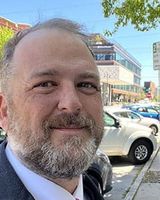
Mission Details
Target: Joey Oliver
Theater: Bokoshe, OK
Operation: WOLF HUNTER
Description: Exposure of protective orders, past rape allegations, and "Gypsy Cop" history. Lawsuit filed by Oliver against Durbin (PO-2024-00277).
Disposition: M.I.A. — Resigned/Retired effective immediately.
The letter was read aloud at a Bokoshe town hall meeting on a sweltering Oklahoma afternoon, the humidity pressing down on a town of fewer than 500 souls like a wool blanket. Mayor Conway's voice was flat, almost bureaucratic, as he read the words Joey Dawn Oliver had written that very morning: "It has been a pleasure working as the Bokoshe chief of police for over two years... I have decided to retire from my position effective immediately." The room, packed with residents who had waited months for exactly this moment, exhaled. Outside in the parking lot, a team of accountability correspondents from Guerrilla News stood next to a truck containing a box of celebratory cupcakes they had quietly hoped to distribute. Operation WOLF HUNTER was over. The chief was gone.
But the story of how Joey Dawn Oliver came to wear a badge in Bokoshe, Oklahoma, and what he allegedly did long before he ever arrived there, is a story that demands to be told in full. Because the retirement letter was not an ending. It was a receipt for years of institutional failure, small-town silence, and a system that allowed one man to move from department to department, carrying his record like luggage no one ever bothered to open.
The Gypsy Cop: Seven Departments in Seventeen Years
In law enforcement circles, the term used informally is "gypsy cop," and it describes a pattern that accountability reporters have documented with alarming frequency across rural America. An officer accumulates complaints, allegations, or outright misconduct findings at one agency, and rather than face termination or prosecution, quietly resigns and surfaces months later wearing a different department's patch in a different county. Background check systems are inconsistent. Small towns are desperate for bodies to fill patrol cars. And so the cycle continues.
Joey Dawn Oliver, by the account of correspondents who spent weeks pulling records across multiple counties, cycled through approximately seven law enforcement agencies over a seventeen-year career. Each departure, sources indicated, came with a version of the same quiet resolution: leave before it gets worse, and let the next town figure it out. Bokoshe, a tiny community in eastern Oklahoma's Le Flore County, became the end of that line, not because the system finally caught him, but because a team of outside correspondents arrived with documents the town's own leadership had apparently never reviewed.
What the Record Actually Shows
The documents obtained and reviewed during this investigation are not rumor. They are court filings, police reports, and civil orders pulled from public records in Sequoyah County and neighboring jurisdictions. Taken together, they describe a man who, while serving as a sworn law enforcement officer, allegedly committed acts that would end the careers and freedoms of ordinary citizens.
Oliver had protective orders filed against him. He was convicted of violating at least one of those protective orders, a criminal matter of record. He faced a rape charge rooted in allegations that he supplied alcohol to a young woman under the age of 21, a girl who hesitated to answer his question about her preferred beer because, as the police report notes plainly, she knew he was a cop and she was a minor. Oliver allegedly left, returned out of uniform and in a different vehicle, and brought Bud Light for the victim and Mike's Hard Lemonade for her friend. The case was later dismissed when the witness did not appear, an outcome the correspondents covering this investigation described as consistent with patterns seen in other covered-up cases involving law enforcement. A second allegation, involving the mother of his own children, was similarly documented in investigative files that Guerrilla News correspondents say they possess in audio and documentary form.
There was also the matter of Oliver's own son. A divorce court order in the case of Cara Oliver versus Stetson Oliver, Joey's son, included a provision that the minor children of that marriage were not to be left alone with Joey Oliver, their own grandfather, unless one of the parents was present. Stetson Oliver agreed to that condition himself. The court did not impose it over his objection. He consented. That detail, perhaps more than any single document, speaks to what those closest to Joey Oliver believed about him.
Bokoshe Had No Idea — Or Did It?
The question that haunted every conversation Guerrilla News correspondents had inside Bokoshe city hall and on its streets was deceptively simple: how much did local leadership know, and when did they know it? Oliver had been Bokoshe's chief of police for more than two years when this investigation reached its conclusion. His application for employment, sources confirmed, did not disclose the prior rape allegations. Whether city commissioners conducted any meaningful background review before handing him a badge and a title remains an open question.
What is documented is that Oliver was, at the time of this investigation, being consulted by Bokoshe Public Schools on the selection of a new school resource officer. The man accused of supplying alcohol to a minor and facing multiple documented sexual assault allegations was helping choose who would patrol the halls of the local school. When correspondents delivered the investigative file, including the original police reports and victim documentation, directly to the school superintendent in person, the superintendent's reaction was described as one of visible shock. His eyes, one correspondent noted, "got real big." He had not seen the documents before that moment.
The Counter-Attack: A Lawsuit and a Protective Order That Backfired
As the investigation intensified, Oliver did not retreat quietly. He filed a civil lawsuit against the lead correspondent, case number PO-2024-00277, and sought a protective order in Sequoyah County to block further reporting and records requests. A judge initially issued a temporary order, but it was vacated shortly thereafter and set for a full hearing, a procedural outcome that the correspondent publicly described as a catastrophic strategic error by Oliver's side.
The reasoning was straightforward and legally significant. By initiating litigation, Oliver inadvertently granted the correspondent subpoena power. Where open records requests had hit walls, a civil case opened doors. Depositions could now be scheduled. Phones could be forensically examined. Agencies that had stonewalled document requests could be compelled to produce records under court order. The correspondent, a man clearly comfortable in the mechanics of civil litigation, announced on camera that he was racing to Sequoyah County to pick up the filed papers and begin issuing subpoenas before Oliver's legal team could move to dismiss the case. Oliver had brought a weapon to a fight and handed it to the other side.
A Town Full of Questions: The Commission Meeting
The Bokoshe town commission meeting that preceded Oliver's resignation was not a quiet procedural gathering. Correspondents arrived with cameras rolling, and the community showed up. Residents who had spoken with the investigative team, some of them women who had their own reasons to want Oliver gone, were present. So was a man correspondents had been tracking separately, a city board member named Dean Collins, who correspondents noted carried his own prior felony conviction while serving as the director of public safety. The layers of accountability concerns in this one small town, a town most Oklahomans could not locate on a map, were stacked remarkably deep.
Inside the meeting room, commissioners convened on the reconvening of discussions begun days earlier. The mayor read Oliver's retirement letter. The room moved on. Outside, the cupcakes were distributed.
The Victims at the Center of This Story
It would be easy, in a story this dense with legal procedure and institutional failure, to lose sight of the women. Guerrilla News correspondents are deliberate in refusing to let that happen. The investigation described at least two women whose allegations against Oliver were documented in official police reports, women whose names are withheld here to protect their privacy, but whose accounts were preserved in investigative files, photographs, and recorded interviews that correspondents say they retain in full.
One of those women was a minor on the night Joey Dawn Oliver showed up at her friend's house in his police uniform and asked what kind of beer she drank. She was hesitant to answer. She knew what he was. She told him anyway. He left, changed his clothes, switched his vehicle, and came back with the alcohol she had named. The charge that followed was eventually dismissed when the witness did not appear for proceedings. She was a teenager. He was a badge-carrying officer of the law. The case went nowhere. And Joey Dawn Oliver went to the next department.
A second victim came forward during the active period of this investigation, according to correspondents on the ground, bringing the documented total of women willing to speak on record to a number that investigators described as compelling and deeply disturbing. Correspondents have indicated they intend to pursue federal jurisdiction avenues, citing Oliver's membership in an Oklahoma tribal nation, a status that could potentially bring these matters under federal law enforcement purview where state-level dismissals would carry less finality.
What Happens Next
Joey Dawn Oliver has retired. His letter says he loved Bokoshe. Bokoshe, one suspects, will survive his absence. But retirement is not accountability. A letter to the mayor is not a reckoning. The civil case he initiated against the correspondent remains an active legal matter. The subpoena process that case unlocked remains underway. And the federal jurisdiction question, given his tribal membership and the nature of the allegations, is one that correspondents say they are actively pursuing with the relevant authorities.
In a broader sense, the story of Joey Oliver is the story of a system with no memory. Seven departments. Seventeen years. A paper trail that existed in public records the entire time, waiting for someone willing to pull it. The town of Bokoshe did not find those records. The schools did not find those records. The commission that hired him did not find those records. A team of accountability correspondents from an independent news outlet found them, drove to eastern Oklahoma, hand-delivered them to a superintendent, filed them into open records requests, and stood in a parking lot with cupcakes waiting for a town hall vote.
That is not how it is supposed to work. But in the absence of systems that function, it is how it sometimes does.
Stay With This Investigation
Guerrilla News will continue to follow the legal proceedings stemming from case PO-2024-00277, the federal jurisdiction question surrounding prior allegations, and the broader pattern of gypsy cop movement across eastern Oklahoma. If you have information about Joey Dawn Oliver, about any of the agencies where he served, or about the women whose cases were closed without justice, contact Guerrilla News through our secure tip line. Watch all four videos from Operation WOLF HUNTER using the links below. Share this article. The women in these reports deserve more than a retirement letter. They deserve the full weight of public attention.
Everyone can join the discussion with a free account. Members get a badge, their comments stand out, and they are eligible for the pinned Top Comment. Join from $7 a month.