Table of Contents
A Mississippi police chief's escalating retaliation against a journalist has culminated in two unlawful arrests, a medical emergency, and a multi-million dollar federal lawsuit. The incidents reveal a troubling pattern of constitutional violations that began with a simple public records request and spiraled into what attorneys describe as kidnapping, stalking, and civil rights violations.
The First Confrontation at City Hall
Investigative reporter Ron Durbin entered Pearl City Hall to file an open records request and potentially interview the mayor. What should have been routine government transparency work quickly became contentious when Durbin began filming in publicly accessible areas of the building.
The mayor's assistant objected to being recorded and summoned Police Chief Nick McClendon. Despite acknowledging that Durbin could film in the public hallway, McClendon demanded he leave an office area that had no signage restricting public access and an open door.
"You can be out here in the public area all you want," McClendon told Durbin in the hallway, only to reverse course moments later when pressed about the lack of proper signage restricting access to government offices.
When Policy Trumps Constitution
The confrontation escalated when McClendon cited a new city policy rather than established law. Durbin challenged this, stating that policy cannot override constitutional rights. Court precedent requires government buildings to use clear signage or locked doors to restrict public access to specific areas.
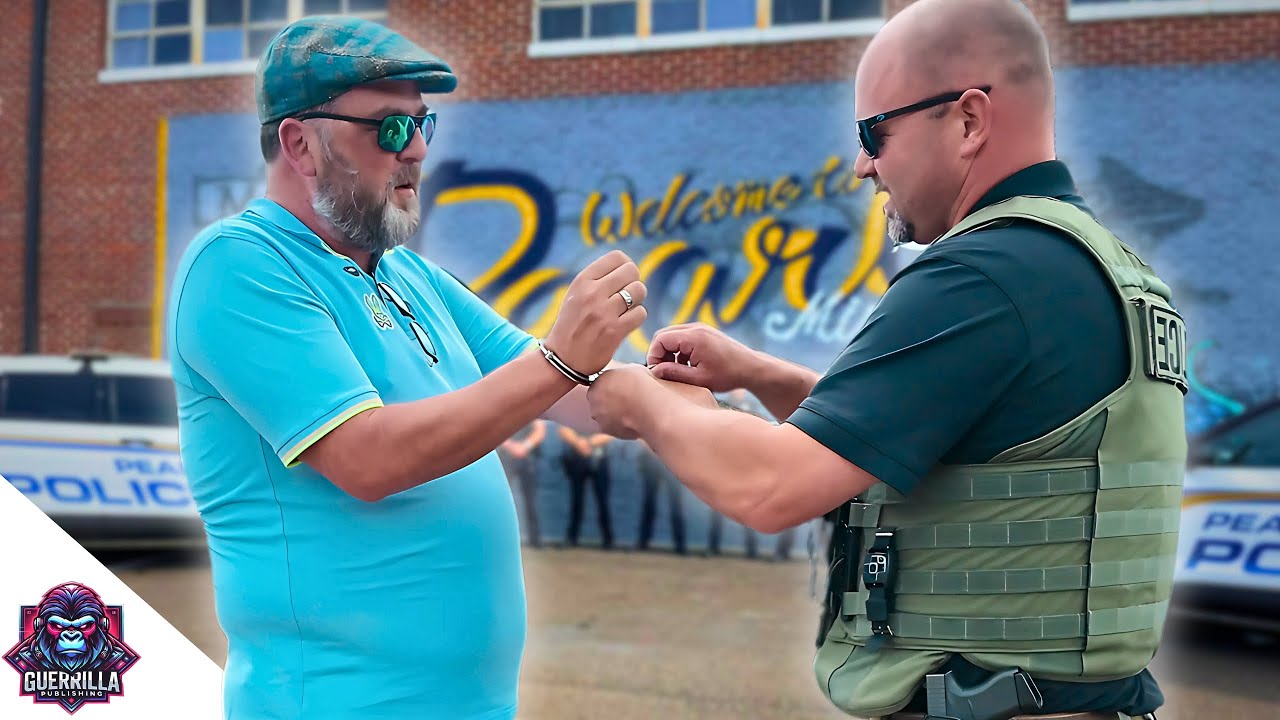
McClendon's response was swift and decisive. When Durbin continued asserting his rights, the chief asked if anyone wanted to sign a complaint. Someone apparently agreed, and McClendon immediately moved to arrest.
"Put your hands behind your back," McClendon ordered, ending the discussion about constitutional law with handcuffs.
Medical Emergency in the Heat
What followed raises serious questions about prolonged detention and duty of care. Durbin, who has documented heart conditions, was kept outside in 90-degree heat for nearly an hour while officers waited for a warrant that never materialized.
As Durbin's condition deteriorated, officers offered to take him for medical treatment but only if he agreed to return to jail afterward. When he refused this conditional care, they continued the prolonged detention in the sun until a concerned viewer called an ambulance.
The medical emergency forced a bizarre decision: officers "unarrested" Durbin to avoid paying his hospital bills, but then had two officers follow him through the hospital while he received treatment.
The Hospital Stalking Incident
This is where the case took its most disturbing turn. While Durbin was technically not under arrest during his medical treatment, Pearl officers shadowed him throughout the hospital, allegedly violating HIPAA privacy laws and causing additional stress that worsened his heart condition.
Medical staff reportedly shared private health information with the officers during this unauthorized surveillance. When Durbin was finally discharged, officers arrested him again outside Pearl's jurisdiction, creating additional legal complications and ensuring the city would pay for all medical bills their actions had caused.
The judge set bail at $20,000 for the misdemeanor charges, four times higher than anything in Durbin's legal experience.
The Second Arrest Gets Worse
Weeks later, Durbin returned to Pearl for his court date on the first arrest. While standing on the front steps of City Hall, he encountered McClendon again. This time, the conversation was more heated.
Durbin called McClendon a "piece of shit" during their exchange on public property. McClendon's response revealed either a fundamental misunderstanding of First Amendment law or a willful disregard for it.
"Fighting words are disorderly conduct. You got freedom of speech, but fighting words are not," McClendon declared before making the arrest. Legal experts note that the Supreme Court's "fighting words" doctrine requires much more than name-calling to justify arrest.
Perhaps most troubling, McClendon transported Durbin in his personal truck rather than a police vehicle, another apparent violation of proper procedure.
The Million-Dollar Reckoning
Durbin has filed a $7.5 million federal lawsuit against McClendon, the officers involved in the hospital surveillance, the City of Pearl, and St. Dominic's Hospital. The suit alleges First Amendment violations, HIPAA violations, kidnapping, stalking, and civil rights violations under federal law.
The irony is thick given McClendon's own words in a previous interview: "We're going to be professional, and we're going to operate inside the confines of the Constitution... we're going to hold ourselves accountable. If we mess up, we got to be held accountable."
But questions remain about what happens next in Pearl, Mississippi, and whether McClendon's pattern of escalation will continue with other journalists and citizens. The full confrontations, medical emergency, and second arrest were all captured on video, providing a complete record of how quickly routine government accountability can spiral into constitutional crisis.
Watch the complete footage to see exactly how a simple records request became a federal civil rights case.